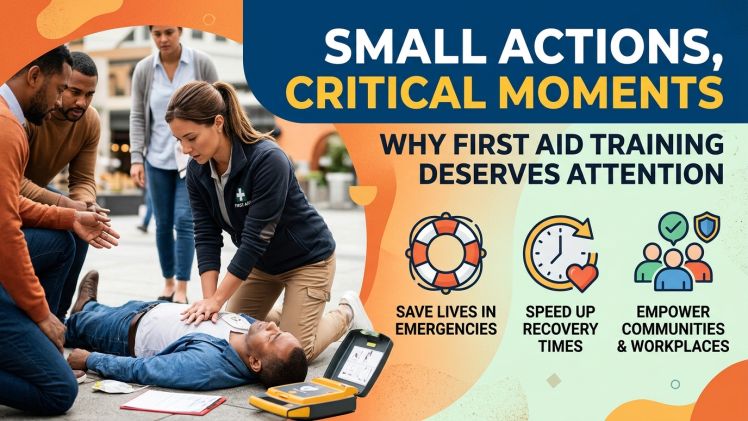

Seldom do emergencies have a warning. A youngster may be hurt while playing, a person may unexpectedly pass out at work, or someone may have trouble breathing at a family get-together. The decisions made in the initial few minutes of such circumstances might have a big impact. Knowing how to react before aid comes is just as crucial as receiving expert medical care. Practical knowledge gained from first aid training enables regular people to deal with unforeseen circumstances with more assurance and accountability.
Realising The Significance Of Quick Action
Confusion and fear might cause a delay in the essential reaction during an emergency. Because they are uncertain whether their actions will improve or worsen the situation, people often pause. By training people how to identify crises, evaluate possible threats, and react correctly, proper first aid education tackles this ambiguity.
Further difficulties may be avoided, for instance, by understanding how to treat severe bleeding, rescue someone who is choking, or identify warning signs of a medical emergency. Healthcare workers are not the only people with these abilities. Knowing the fundamentals of emergency aid is beneficial for everyone.
Increasing Self-Belief Via Practical Education
While reading about emergency protocols might be helpful, experiencing them under supervision offers a deeper level of comprehension. Participants may gain confidence in their skills and become acquainted with emergency procedures via hands-on training.
People who are thinking about first aid training Sydney might look at programmes that blend classroom learning with hands-on evaluations. Common injuries, medical crises, and proper response techniques are often included in these programmes.
Participants may better grasp their obligations and constraints via practical exercises. A better coordinated approach might result from knowing when to provide aid, when to call emergency services, and how to convey critical information.
Identifying Emergencies Before They Get Serious
Not all medical emergencies start with overt symptoms. Early detection is especially crucial in conditions that develop gradually.
While someone suffering from a severe allergic response may experience swelling or breathing difficulty, someone having a heart attack may first report chest tightness. Knowing these warning indicators makes it easier for people to determine when they need emergency medical care.
Additionally, first aid instruction encourages individuals to pay close attention to their surroundings. Unnecessary risks may be decreased by recognising possible dangers, having emergency supplies on hand, and being aware of workplace safety protocols.
Acquiring CPR As A Crucial Emergency Capability
One of the most crucial skills taught in many first aid courses is cardiopulmonary resuscitation. When someone goes into cardiac arrest, doing CPR right away may help keep their blood flowing until emergency medical assistance arrives.
People may learn CPR and how to use automated external defibrillators from training companies like CPR First Aid Pro.
Participants learn how to identify cardiac arrest, provide chest compressions, and adhere to the proper emergency protocols during hands-on training. Because suggestions might change and practical skills can become less familiar over time, regular refresher training is beneficial.
Making First Aid Knowledge Useful In Daily Life
Situations other than serious accidents might benefit from first aid. In homes, offices, and recreational settings, minor burns, wounds, sprains, and unexpected illnesses are frequent occurrences.
By taking an HLTAID011 first aid course, individuals may get the knowledge and abilities needed to respond to a range of injuries and medical circumstances. This nationally recognised unit in Australia deals with administering first aid in compliance with applicable regulations and workplace protocols.
Parents, teachers, office workers, athletes, and those in charge of managing others may all benefit greatly from the information acquired.
Promoting A Preparedness And Safety Culture
The value of first aid awareness increases when communities actively promote training participation. Families may talk about emergency protocols, schools can teach age-appropriate safety knowledge, and workplaces can promote staff education.
Maintaining first aid supplies, knowing evacuation routes, and making sure emergency contact information is always available are further aspects of being prepared. These easy steps encourage safer surroundings and support formal instruction.
Conclusion
Obtaining a certificate is just one aspect of first aid training. It is about acquiring useful skills that might be useful in unforeseen situations. Skills that help people and their communities include identifying warning signals, reacting composedly, and offering the proper support. Taking small steps at crucial times may save lives, lessen difficulties, and provide comfort until expert medical assistance comes.